One of the most common concerns parents have is, “My child is almost two…or three…and they still aren’t talking. Should I be worried?” It can be difficult to know what is normal, what might be a temporary delay, and when it’s time to seek professional help.
Every child develops at their own pace, but communication is one of the most important developmental skills for learning, socializing, and expressing needs. If your toddler isn’t talking yet, early evaluation and intervention can make a significant difference.
First: What Is Considered “Normal” Language Development?
Children develop communication skills gradually. While there is a range of normal development, most toddlers achieve the following milestones:
By 12 Months
● Responds to their name
● Uses gestures such as pointing, waving, or reaching
● Understands simple words like “no” or “bye-bye”
● Says 1-3 words
By 18 Months
● Uses approximately 10-20 words
● Attempts to imitate words
● Follows simple directions
● Points to desired objects
By 24 Months
● Uses at least 50 words
● Combines two words together (“more milk,” “mommy up”)
● Understands simple questions
● Names familiar objects
By 3 Years
● Uses short sentences
● Vocabulary grows to several hundred words
● Strangers can understand much of what they say
● Answers simple questions
If your toddler is significantly behind these milestones, it may be time to investigate further.
Signs Your Toddler May Need Additional Support
Consider discussing your concerns with your pediatrician or a speech-language pathologist if your child:
● Is not babbling by 12 months
● Has no words by 16-18 months
● Has fewer than 50 words by age 2
● Is not combining words by age 2
● Seems frustrated when trying to communicate
● Doesn’t respond consistently to their name
● Has difficulty following directions
● Lost words they previously used
● Relies heavily on gestures without developing verbal language
Remember: waiting to see if your child “catches up” can sometimes delay access to services that could help them progress sooner.
Why Might a Toddler Not Be Talking Yet?
There are many possible reasons for delayed speech and language development.
Hearing Difficulties
Children learn language by hearing language.
Even mild or recurring hearing loss caused by frequent ear infections can affect speech development.
Signs may include:
● Not responding consistently to sounds
● Frequently saying “huh?”
● Delayed language despite strong social engagement
A hearing evaluation is often one of the first recommendations when speech delays are present.
Speech and Language Delays
Some children simply have delays in developing language skills.
These children may:
● Understand more than they can express
● Use gestures effectively
● Be socially engaged
● Show steady, though slower, progress
Speech-language therapy can help build vocabulary, communication skills, and confidence.
Oral Motor Difficulties
Some children know what they want to say but have difficulty coordinating the muscles needed for speech.
Signs may include:
● Difficulty imitating sounds
● Limited sound variety
● Feeding difficulties
● Excessive drooling
● Difficulty chewing certain textures
A speech-language pathologist can assess oral motor skills and determine whether therapy is needed.
Autism Spectrum Disorder
Speech delays can sometimes be one of the early signs of autism.
Additional signs may include:
● Limited eye contact
● Reduced social interaction
● Repetitive behaviors
● Difficulty engaging in back-and-forth play
● Delayed gestures such as pointing
Not every child with delayed speech has autism, but a comprehensive developmental evaluation may be recommended if multiple concerns are present.
Developmental Delays
Speech delays may occur alongside delays in:
● Motor development
● Cognitive skills
● Social-emotional skills
● Sensory processing
A multidisciplinary evaluation can help identify the underlying cause and appropriate supports.
What Can Parents Do at Home?
Parents play an enormous role in language development.
The good news is that everyday interactions create countless opportunities to build communication skills.
Talk Throughout the Day
Narrate activities as they happen.
Examples:
● “We’re putting on your shoes.”
● “Look at the big truck!”
● “The banana is yellow.”
Hearing language repeatedly helps children learn vocabulary and sentence structure.
Follow Your Child’s Interests
Children learn best when engaged.
If your toddler loves:
● Trains
● Dinosaurs
● Bubbles
● Animals
Use those interests as opportunities to model language.
For example:
● “Train go!”
● “Big dinosaur!”
● “More bubbles!”
Read Together Daily
Reading exposes children to:
● New vocabulary
● Sentence patterns
● Story structure
● Listening skills
Choose books with:
● Bright pictures
● Repetitive phrases
● Interactive opportunities
Ask simple questions and point to pictures as you read.
Reduce the Need to Guess
Sometimes parents become experts at anticipating every need.
Instead of immediately providing what your child wants:
Pause.
Create opportunities for communication by:
● Holding up choices
● Waiting expectantly
● Encouraging gestures or vocalizations
Even a sound, sign, or approximation can be reinforced.
Expand Their Communication
If your child says:
“Ball”
You can model:
“Big ball.”
If they say:
“Dog”
You can say:
“Brown dog.”
This teaches children how language grows from single words into phrases and sentences.
Limit Passive Screen Time
While educational programming can have benefits, language develops best through real human interaction.
Children learn communication through:
● Eye contact
● Facial expressions
● Turn-taking
● Social engagement
These experiences cannot be fully replaced by screens.
What If My Child Understands Everything but Doesn’t Talk?
This is a very common concern.
Many toddlers with speech delays have strong receptive language (understanding) but weaker expressive language (speaking).
These children may:
● Follow directions well
● Understand routines
● Point to requested objects
● Communicate through gestures
Although understanding language is encouraging, these children can still benefit from speech therapy to help them express themselves verbally.
Why Early Intervention Matters
The brain develops rapidly during the first few years of life.
Early intervention can:
● Improve communication skills
● Reduce frustration
● Strengthen social interaction
● Improve school readiness
● Support family confidence
Research consistently shows that children who receive support early often make greater progress than those who wait.
Seeking an evaluation does not mean something is seriously wrong—it simply provides information and guidance.
How Speech Therapy Can Help
Speech-language pathologists evaluate:
● Understanding language
● Expressive language skills
● Play skills
● Social communication
● Oral motor function
● Feeding concerns
● Overall developmental communication abilities
Therapy may focus on:
● Increasing vocabulary
● Encouraging word combinations
● Improving speech sounds
● Developing social communication
● Teaching parents effective language-building strategies
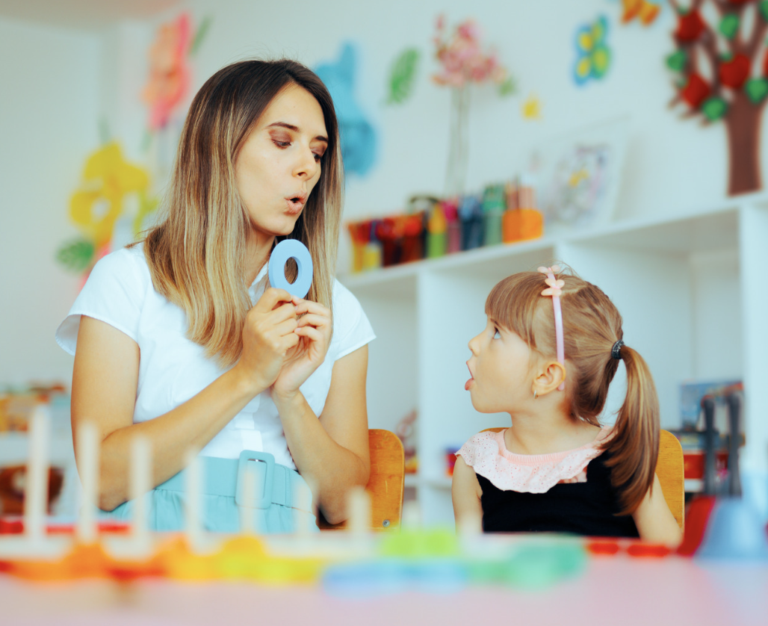
For many toddlers, therapy is play-based, engaging, and designed around the child’s interests.
When Should I Seek an Evaluation?
Consider scheduling an evaluation if:
● Your child has no words by 18 months
● Uses fewer than 50 words by age 2
● Is not combining words by age 2
● Shows limited understanding of language
● Has feeding difficulties alongside speech concerns
● You simply feel something isn’t right
Parents are often the first to recognize when their child is struggling.
Trust your instincts.
Final Thoughts
If your toddler isn’t talking yet, you’re not alone. Speech and language delays are among the most common developmental concerns in young children. While some children do catch up naturally, others benefit greatly from early intervention and specialized support.
The most important thing is not to wait out of fear or uncertainty. An evaluation can provide answers, identify strengths, and help create a plan for supporting your child’s communication development.
Every child deserves the opportunity to express their thoughts, needs, and personality. With the right support, many children who start out behind can make remarkable progress and gain the skills they need to communicate confidently with the world around them.
At Crawl Walk Jump Run Therapy Clinic, our speech-language pathologists work closely with children and families to identify communication challenges early and develop individualized treatment plans that help children find their voice. If you have concerns about your toddler’s speech development, we’re here to help guide you through the next steps.