Is your child getting ready for preschool or kindergarten? While parents often focus on learning letters, recognizing numbers, and practicing colors before the first day of school, there is another important part of school readiness that deserves attention: gross motor development.
Gross motor skills help children use the large muscles of their bodies to move, balance, coordinate movements, and participate in everyday activities. These skills support more than playground fun. They can also help children participate in classroom routines, develop independence, build confidence, and be ready to learn.
At Crawl Walk Jump Run Therapy Clinic (CWJR), we help children develop the movement skills they need to participate more fully at home, at school, and in their communities. Supporting gross motor development before preschool or kindergarten can help children feel more prepared for the physical demands of their school day.
What Are Gross Motor Skills?
Gross motor skills involve the large muscle groups used for activities such as sitting upright, walking, running, jumping, climbing, and maintaining balance.
As children grow, they build these skills through everyday play and movement. Some examples of gross motor skills that support school readiness include:
● Balance: Standing on one foot, walking along a line, or navigating playground equipment.
● Coordination: Using both sides of the body together, catching a ball, or completing movement sequences.
● Core strength and postural control: Sitting upright during circle time, maintaining a position at a table, and participating in floor activities.
● Motor planning: Figuring out how to perform a new movement, follow a simple obstacle course, or navigate an unfamiliar playground.
● Locomotor skills: Walking, running, hopping, jumping, and changing direction safely.
● Body awareness: Understanding where the body is in space and moving around people, furniture, and other obstacles.
Children develop these abilities at different rates. However, when movement challenges make everyday activities difficult, it may be helpful to look more closely at a child’s gross motor development.
How Gross Motor Skills Support Academic Success
Gross motor development and academic learning may seem like separate areas of development, but they work together in important ways. Children use movement skills throughout the school day, from getting to the classroom to sitting with classmates and participating in playground activities.
1. Building the Foundation for Classroom Participation
Preschool and kindergarten involve many activities that require children to control their bodies. Children may sit on the floor during circle time, move between classroom centers, stand in line, participate in group activities, and sit at a table for learning tasks.
Core strength, balance, and postural control help children manage these physical demands. When a child has difficulty maintaining a comfortable position or frequently struggles with movement tasks, participating in classroom routines may require additional effort and support.
Developing these foundational skills can help children participate more comfortably in everyday school activities.
2. Supporting Attention and Readiness to Learn
Young children learn through a combination of movement, exploration, play, and interaction. Opportunities to move throughout the day can support healthy development and help children engage with their environment.
When children have difficulty with balance, coordination, or body control, certain classroom activities may be more challenging. For example, a child who struggles to sit upright comfortably may have a harder time participating in a seated activity.
Gross motor skills are not a measure of intelligence, and motor challenges do not automatically mean a child will have academic difficulties. However, movement challenges can create barriers to participation. Addressing them may help children access learning activities more successfully.
3. Encouraging Confidence and Independence
Starting preschool or kindergarten is a big milestone. Children are learning to follow routines, interact with peers, try new activities, and do more things independently.
Gross motor skills help children navigate their school environment, climb onto playground equipment, participate in movement games, and keep up with age-appropriate activities.
When children feel more comfortable with movement, they may be more willing to try unfamiliar tasks and participate with their classmates. Building confidence through achievable movement experiences can help make the transition to school more positive.
4. Developing Coordination for Fine Motor and Classroom Tasks
Gross motor skills and fine motor skills are different, but they contribute to a child’s overall ability to participate in school.
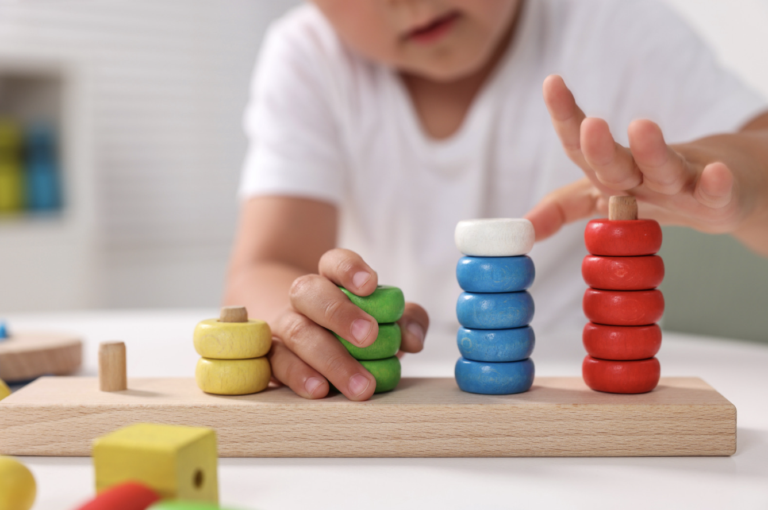
Fine motor skills involve smaller movements, such as holding a crayon, using scissors, manipulating small objects, and beginning to write letters. Gross motor skills contribute to the broader foundation of body control, balance, and coordination needed for many everyday activities.
For example, a child needs enough postural control to maintain a stable position while using their hands for drawing or other table activities. Fine motor development also depends on more specific hand skills, practice, and experience.
Supporting both gross and fine motor development can help children build a wider range of skills for school.
5. Making Recess, Physical Education, and Playground Time More Enjoyable
Recess and playground time offer opportunities for children to move, explore, practice social skills, and build friendships.
Running, jumping, climbing, balancing, and participating in simple games all involve gross motor skills. Children who find these activities difficult may feel hesitant to join their peers or may need extra support to participate safely.
Developing gross motor skills can help children access more opportunities for active play, practice taking turns, and participate in group movement activities.
Why It Helps to Address Gross Motor Delays Before School Starts
Preschool and kindergarten introduce new physical, social, and learning expectations. Children may be expected to navigate a busy classroom, manage transitions, participate in group activities, and engage in playground play with increasing independence.
If a child is experiencing a gross motor delay, starting therapy before school may provide an opportunity to work on skills that are important to their daily routines.
Physical therapy can help children improve areas such as:
● Balance and coordination
● Core strength and postural control
● Walking, running, jumping, and hopping
● Stair navigation and playground mobility
● Motor planning and movement sequencing
● Functional mobility and participation in age-appropriate activities
The goal is not for every child to perform every skill perfectly before the first day of school. Instead, the goal is to identify challenges that affect participation and help each child build skills appropriate to their individual needs.
Early support may also help parents understand how to encourage movement and independence at home.
Fun Ways to Practice Gross Motor Skills at Home
You do not need expensive equipment or a complicated exercise program to encourage gross motor development. Everyday play can provide valuable opportunities to practice movement.
Here are a few ideas to try with your child.
Create a Simple Obstacle Course
Use pillows, cones, painter’s tape, or other safe household items to create a simple course. Encourage your child to step over objects, walk around obstacles, crawl through a designated space, or follow a path.
Obstacle courses can provide opportunities to practice balance, coordination, body awareness, and motor planning. Adjust the activities to your child’s abilities and supervise closely.
Practice Jumping and Hopping
Make a path of floor markers or use chalk outdoors to create targets for jumping. Younger children may begin by practicing two-footed jumps, while children who are ready may practice hopping or jumping forward.
Keep the activity playful rather than focusing on perfect performance.
Play Ball Games
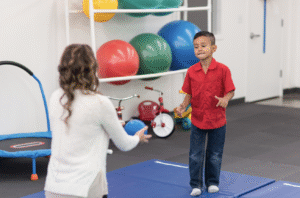
Rolling, throwing, kicking, and catching a ball encourage children to coordinate their bodies and respond to moving objects. Start with a large, lightweight ball and a short distance, then adjust the challenge as your child becomes more comfortable.
Try Animal Walks
Invite your child to move like different animals. They might crawl like a bear, hop like a frog, or walk on tiptoes like a tall giraffe.
Animal walks can encourage strength, coordination, balance, and body awareness while making movement fun.
Practice Everyday Independence
Whenever appropriate, let your child practice activities such as walking up and down stairs with appropriate support, getting up from the floor, navigating safe playground equipment, and moving between play areas.
These everyday opportunities help children apply movement skills to real-life routines.
Build Movement Into Your Daily Routine
Take walks, visit a playground, dance to music, play follow-the-leader, or make a game out of moving from one activity to another. Regular opportunities for active play help children practice their skills in different environments.
Remember: Activities should be appropriate for your child’s age and abilities. Choose safe surfaces, supervise play, and avoid forcing movements that cause pain, distress, or unsafe loss of balance.
Signs Your Child May Benefit From a Gross Motor Evaluation
Children develop at different rates, and occasional difficulty learning a new movement is normal. However, if your child consistently struggles with movement skills or has difficulty participating in age-appropriate activities, it may be worth discussing your concerns with their pediatrician or a physical therapist.
You may notice that your child:
● Frequently trips, falls, or has difficulty navigating their environment.
● Struggles with running, jumping, climbing, or using stairs compared with peers.
● Has difficulty maintaining balance during everyday activities.
● Avoids playground equipment or movement-based games because they seem too difficult.
● Has trouble coordinating both sides of their body during play.
● Needs significantly more assistance than expected for everyday mobility tasks.
● Becomes frustrated or avoids activities that involve physical movement.
These signs do not necessarily mean your child has a developmental delay. A professional evaluation can help determine whether a child would benefit from support and identify which skills to address.
If you are concerned about your child’s development, you do not need to wait until kindergarten begins to ask for help.
How Pediatric Physical Therapy Can Help Prepare Your Child for School
Pediatric physical therapy focuses on helping children develop the movement skills they need for everyday activities. A physical therapist evaluates a child’s strength, balance, coordination, mobility, and functional movement, while considering how those skills affect participation at home, school, and in the community.
At Crawl Walk Jump Run Therapy Clinic, our therapists work with families to understand each child’s strengths, challenges, and goals.
Depending on your child’s needs, physical therapy may focus on:
● Developing foundational strength, balance, and coordination.
● Improving functional mobility and confidence with movement.
● Practicing skills needed for playground activities and school routines.
● Building motor planning skills through structured, play-based activities.
● Helping parents identify practical ways to encourage progress at home.
● Supporting participation in activities that are meaningful to the child and family.
Therapy is individualized. Some children may need help with a few specific skills, while others may benefit from a more comprehensive plan to address gross motor delays.
When appropriate, families can also share information with their child’s preschool or kindergarten team so that everyone understands the child’s needs and can support participation consistently.
Preparing for Preschool and Kindergarten Starts With the Whole Child
School readiness involves much more than knowing letters, numbers, shapes, and colors. Children also need opportunities to develop movement, communication, social interaction, self-help, and problem-solving skills.
Gross motor development is one part of this bigger picture. By supporting balance, coordination, strength, and mobility, families can help children build skills for active play, classroom routines, and greater independence.
If your child is approaching preschool or kindergarten and you have concerns about their gross motor development, seeking guidance early can help you understand what support may be appropriate.
Crawl Walk Jump Run Therapy Clinic is here to help children build skills for everyday life.
If you have questions about your child’s gross motor development or would like to learn more about pediatric physical therapy, contact our team to discuss the next steps.
Ready to get started? Call Crawl Walk Jump Run Therapy Clinic at 586-323-2957 or email patientcare@crawlwalkjumprun.com to learn more about our services.
Every child develops at their own pace. If you have concerns about your child’s development, consult their pediatrician or a qualified pediatric therapy professional for individualized guidance.