Don’t Wait for a Fall to Become a Problem
As the weather gets colder and winter approaches, everyday activities can become more challenging for adults who already struggle with balance, walking, or mobility. Snow-covered sidewalks, icy driveways, slippery parking lots, bulky winter clothing, and changes in footwear can make it harder to move around safely.
For an older parent, spouse, or loved one living with a neurological condition, these seasonal changes can create additional concerns about falling.
But here’s something many families don’t realize: You don’t have to wait until someone falls to seek physical therapy.
If your loved one is becoming less steady on their feet, holding onto furniture while walking, avoiding stairs, or feeling nervous about going outside, a physical therapy evaluation may help identify areas of concern and provide strategies to improve balance, mobility, and confidence before winter weather arrives.
At Crawl Walk Jump Run Therapy Clinic, we specialize in neurological rehabilitation and understand that balance is about much more than leg strength.
Why Does Balance Become More Difficult as We Age?
Balance is something most people don’t think about until it becomes difficult. It requires several systems in the body to work together to keep us upright and help us move safely.
Your body relies on three major sources of information:
- Vision: Your eyes help you understand where you are in your surroundings and identify obstacles.
- The vestibular system: Located in your inner ear, this system helps your brain understand your head position and movement.
- Proprioception and sensation: Sensory information from your muscles, joints, and feet helps your brain understand where your body is positioned.
Your brain processes this information and coordinates the muscles needed to maintain balance, adjust your posture, and take steps when necessary.
As we age, changes in strength, sensation, vision, reaction time, and mobility can make balance more challenging. Certain medical and neurological conditions can also affect how the brain and body communicate during movement.
When one or more of these systems is not working effectively, everyday activities such as getting out of a chair, turning around, stepping over an obstacle, or walking on uneven ground can become more difficult.
Why Is Fall Prevention Especially Important Before Winter?
Winter can introduce additional challenges for someone who already has difficulty with balance or walking.
Consider some of the situations your loved one may encounter:
- Walking across an icy driveway or sidewalk.
- Getting in and out of a vehicle in a snowy parking lot.
- Stepping over snowbanks or uneven surfaces.
- Walking into a building with wet or slippery floors.
- Wearing heavier coats, boots, and other clothing that may restrict movement.
- Navigating stairs when carrying groceries or other belongings.
- Walking in low-light conditions during shorter winter days.
For someone with reduced balance, slower reactions, muscle weakness, or difficulty lifting their feet, these situations can increase the challenge of moving safely.
A fall can result in injuries such as fractures or head injuries. It can also lead to fear of falling, reduced activity, and loss of confidence. Some individuals begin avoiding activities they once enjoyed because they are worried about losing their balance.
Preparing before winter weather arrives gives your loved one an opportunity to work on balance, strength, walking, and mobility before these seasonal challenges become part of their daily routine.
Signs Your Adult Loved One May Benefit From Physical Therapy
Sometimes the signs of declining balance happen gradually. Family members may notice changes before the individual recognizes how much their mobility has changed.
Your loved one may benefit from a physical therapy evaluation if you notice:
- Holding onto walls, furniture, or other people while walking.
- Taking shorter or slower steps.
- Shuffling their feet or having difficulty lifting their toes.
- Losing their balance when turning or changing directions.
- Difficulty getting up from a chair or off the floor.
- Needing more assistance with stairs.
- Feeling unsteady when walking outside or on uneven surfaces.
- Experiencing dizziness or difficulty maintaining balance when moving their head.
- Having a history of falls or near-falls.
- Avoiding activities because of a fear of falling.
- Needing a walker or cane but having difficulty using it safely.
Even if your loved one has not fallen, these changes may indicate that their balance or mobility needs additional attention.
Why a Neurological Physical Therapist May Be the Best Fit for Your Loved One
One of the most important considerations when choosing a physical therapist for balance and fall prevention is understanding why your loved one is having difficulty maintaining their balance.
Not all balance problems have the same cause.
A physical therapist who specializes in neurological rehabilitation has advanced clinical knowledge and experience working with individuals whose balance and movement are affected by conditions involving the brain, spinal cord, or nervous system.
This can be especially important for adults living with conditions such as:
- Stroke
- Parkinson’s disease
- Multiple sclerosis (MS)
- Traumatic brain injury (TBI)
- Spinal cord injury
- Cerebral palsy
- Peripheral neuropathy
- Other neurological or neuromuscular conditions
These conditions can affect balance in ways that go beyond typical age-related changes or orthopedic weakness.
What Makes Neurological Balance Rehabilitation Different?
A neurological physical therapist looks at how the nervous system controls movement and responds to changes in the environment.
For example, someone who has experienced a stroke may have weakness on one side of their body, difficulty shifting their weight, or trouble coordinating their steps.
Someone with Parkinson’s disease may experience freezing episodes, shorter steps, difficulty turning, or reduced automatic movement.
An individual with multiple sclerosis may experience changes in sensation, coordination, strength, or fatigue that affect walking and balance.
Someone with peripheral neuropathy may have reduced sensation in their feet, making it harder to feel where their feet are positioned when standing or walking.
These challenges require an understanding of how neurological changes affect the body’s ability to maintain balance and safely respond to movement.
A neurological physical therapist may focus on:
- Improving coordination between the brain and muscles.
- Training balance reactions and weight shifting.
- Improving the ability to start, stop, and change directions while walking.
- Practicing safe stepping strategies when balance is challenged.
- Improving walking patterns and foot clearance.
- Addressing sensory and movement challenges.
- Practicing activities that require attention and movement at the same time.
- Improving confidence and safety with mobility equipment.
The goal is not simply to make the legs stronger. It is to help the brain and body work together more effectively during everyday movement.
How Is This Different From Orthopedic Physical Therapy?
Orthopedic physical therapy is an important specialty that focuses on conditions involving muscles, bones, joints, and other structures of the musculoskeletal system.
An orthopedic physical therapist may be an excellent choice for someone whose balance difficulties are primarily related to:
- A recent knee or hip replacement.
- Arthritis or joint pain.
- A lower extremity injury.
- Muscle weakness following surgery.
- Limited joint movement.
- Musculoskeletal changes affecting walking.
A neurological physical therapist focuses on movement challenges related to the nervous system, including changes in coordination, sensation, muscle control, balance reactions, and walking patterns.
There is overlap between these specialties, and both types of physical therapists are trained to evaluate balance and fall risk. The best fit depends on the underlying cause of the individual’s difficulties.
If your loved one has a neurological diagnosis or their balance problems involve changes in coordination, sensation, muscle control, or walking patterns, choosing a PT with neurological rehabilitation experience can be especially valuable.
The goal is to find a therapist who understands not only that your loved one is losing their balance, but also what may be contributing to the problem.
What Can a Neurological Physical Therapist Do to Help Improve Balance?
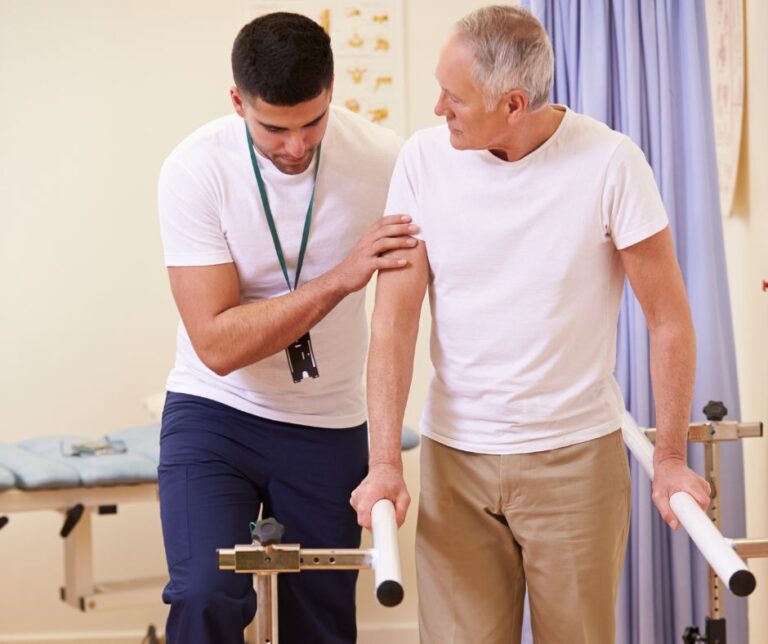
A neurological physical therapist begins with an individualized evaluation to understand your loved one’s current abilities, limitations, and fall risk.
The therapist may assess:
- Walking patterns and walking speed.
- Standing and sitting balance.
- Lower extremity strength.
- Coordination and movement control.
- Sensation and awareness of body position.
- Ability to change directions and navigate obstacles.
- Transfers, such as getting in and out of a chair.
- Use of a cane, walker, or other mobility equipment.
- Confidence and fear related to falling.
Treatment is then designed around the individual’s needs and goals.
1. Balance Training
Balance exercises help individuals improve their ability to maintain stability while standing, reaching, turning, and moving.
Activities may include weight shifting, standing in different positions, reaching outside the base of support, and practicing controlled movements in multiple directions.
Exercises are progressed as appropriate to safely challenge the individual’s balance.
2. Gait Training
Gait training focuses on improving the way someone walks.
A physical therapist may work on:
- Step length and walking speed.
- Foot clearance.
- Weight shifting from one leg to the other.
- Starting and stopping safely.
- Turning and changing directions.
- Walking on different surfaces.
- Using a cane, walker, or other mobility device correctly.
Walking practice may also include navigating obstacles and responding to changes in the environment.
3. Strength and Functional Movement Training
Strong muscles help support standing, walking, and everyday movement.
Exercises may focus on the hips, thighs, lower legs, and core to improve the ability to stand from a chair, climb stairs, step over obstacles, and move safely.
Strengthening is most effective for fall prevention when combined with balance and functional training rather than used alone.
4. Coordination and Neuromuscular Re-Education
Neurological conditions can affect how the brain communicates with the muscles.
Neuromuscular re-education uses purposeful activities to help improve movement control, coordination, and the body’s response to changes in position.
These exercises may be particularly helpful for individuals who have difficulty controlling their movements or responding quickly when their balance is challenged.
5. Fall Recovery and Safety Strategies
For appropriate individuals, therapy may include learning safer strategies for getting down to and up from the floor, practicing transfers, and understanding when to ask for assistance.
A therapist may also recommend changes to mobility equipment, footwear, or home arrangements to improve safety.
Why Starting Physical Therapy Before a Fall Matters
Many families wait until a loved one falls before seeking physical therapy. Unfortunately, a fall can sometimes lead to an injury, hospitalization, reduced activity, and a longer recovery process.
Being proactive allows a therapist to identify movement challenges and work on them before they contribute to a more serious incident.
Physical therapy may help your loved one:
- Improve balance and stability.
- Build strength and endurance.
- Improve walking and mobility.
- Practice safer movement strategies.
- Increase confidence during everyday activities.
- Learn how to use mobility equipment appropriately.
- Identify potential fall hazards at home.
- Maintain independence and participation in daily routines.
Research supports individualized, progressive balance training as an important part of fall prevention. Current physical therapy guidelines recommend combining balance training with other appropriate exercises and addressing each individual’s risk factors.
Although physical therapy cannot eliminate every fall risk, it can be an important part of a proactive fall-prevention plan.
How Can Families Help Reduce Fall Risk at Home?
In addition to physical therapy, there are steps families can take to make the home environment safer.
Consider:
- Removing loose rugs and clutter from walking paths.
- Keeping frequently used items within easy reach.
- Installing grab bars where appropriate.
- Making sure hallways and stairs have adequate lighting.
- Encouraging appropriate, supportive footwear.
- Keeping walkways clear of snow and ice.
- Using handrails when navigating stairs.
- Making sure prescribed mobility equipment is properly fitted and used.
- Talking with a healthcare provider about medications, vision changes, dizziness, or other concerns that may contribute to falls.
Remember that fall prevention is not just about improving strength. It involves looking at the whole person and the environment in which they move.
Help Your Loved One Prepare for Winter With Neurological Physical Therapy at CWJR
At Crawl Walk Jump Run Therapy Clinic, we understand how important it is for adults to maintain their mobility, independence, and confidence.
Our neurological physical therapy services help individuals with neurological conditions work toward improved balance, coordination, strength, walking, and functional mobility.
Whether your loved one has experienced a stroke, lives with Parkinson’s disease or multiple sclerosis, or is simply becoming less steady on their feet, an evaluation can help determine what areas may benefit from physical therapy.
Don’t wait for an icy sidewalk or a fall to bring balance concerns to your attention. Start preparing now.
Contact Crawl Walk Jump Run Therapy Clinic to learn more about our adult neurological physical therapy services and how we may help your loved one work toward safer, more confident mobility.
Call: 586-323-2957
Email: patientcare@crawlwalkjumprun.com
Website: crawlwalkjumprun.com