
The toddler years are filled with exciting milestones—first words, first steps, increased independence, and a growing curiosity about the world. While every child develops at their own pace, some toddlers may experience challenges with sensory processing that can impact their ability to learn, play, communicate, and participate in daily activities.
The good news is that early intervention and sensory-based therapy can help children build foundational skills during a critical period of development. By addressing sensory challenges early, families can help their child develop the skills needed for success at home, in preschool, and beyond.
At Crawl Walk Jump Run Therapy Clinic (CWJR), our Occupational Therapists use sensory-based interventions to help toddlers engage more successfully with their environment, support developmental milestones, and gain confidence in everyday activities.
What Is Sensory Processing?
Our brains are constantly receiving information from our senses and helping us interpret and respond to the world around us.
Most people are familiar with the five traditional senses:
● Sight
● Hearing
● Touch
● Taste
● Smell
However, there are additional sensory systems that play an important role in development:
Vestibular System
Provides information about movement, balance, and head position.
Proprioceptive System
Provides information from muscles and joints about body position and movement.
Interoception
Helps us recognize internal body signals such as hunger, thirst, and emotions.
When the brain has difficulty organizing and responding to sensory information, children may experience sensory processing challenges.
Signs Your Toddler May Have Sensory Processing Difficulties
Every child is different, but some common signs may include:
Sensory Seeking Behaviors
● Constant movement
● Climbing on furniture
● Jumping excessively
● Crashing into objects
● Seeking rough play
● Difficulty sitting still
Sensory Sensitivities
● Covering ears to everyday sounds
● Becoming upset by certain clothing textures
● Avoiding messy play
● Difficulty with grooming activities
● Sensitivity to bright lights
Emotional and Behavioral Challenges
● Frequent meltdowns
● Difficulty transitioning between activities
● Becoming overwhelmed in busy environments
● Trouble calming after excitement
Developmental Concerns
● Delayed motor milestones
● Difficulty with play skills
● Challenges with feeding
● Limited attention span
● Delays in self-help skills
These challenges can impact a child’s ability to explore, learn, and participate in everyday experiences.
Why Early Intervention Matters
The toddler years represent one of the most important periods of brain development.
During this time, the brain is forming millions of neural connections that serve as the foundation for future learning, movement, communication, and social skills.
When sensory challenges are addressed early, children often have more opportunities to:
● Develop age-appropriate skills
● Build confidence
● Improve independence
● Learn through play
● Participate successfully with peers
● Prepare for preschool and school environments
Rather than waiting to see if a child “grows out of it,” early intervention can provide support during a critical window of development.
How Sensory-Based Therapy Helps Toddlers
Sensory-based therapy is designed to help children process sensory information more effectively so they can participate successfully in everyday activities.
At CWJR, therapy sessions are designed to be fun, engaging, and play-based while targeting developmental goals.
Improving Attention and Focus
Children learn best when they can attend to activities and engage with their environment. Sensory-based interventions can help improve:
● Attention span
● Ability to follow directions
● Participation in structured activities
● Readiness for learning
As sensory systems become more organized, many children are better able to engage in age-appropriate play and learning opportunities.
Supporting Motor Development
Sensory processing and motor development are closely connected.
Therapy may help improve:
Gross Motor Skills
● Walking
● Running
● Climbing
● Jumping
● Balance
● Coordination
Fine Motor Skills
● Grasping toys
● Feeding skills
● Stacking blocks
● Coloring
● Early pre-writing skills
When children feel more confident moving their bodies, they are more likely to explore and interact with their environment.
Building Emotional Regulation
Many toddler meltdowns are related to sensory overload, difficulty communicating needs, or challenges regulating emotions.
Sensory-based therapy can help children:
● Recognize body signals
● Develop calming strategies
● Improve transitions
● Tolerate new experiences
● Manage frustration
These skills create a foundation for future emotional regulation and self-control.
Encouraging Play Skills
Play is a child’s primary occupation and one of the most important ways they learn. Therapy helps children develop:
● Imaginative play
● Social interaction
● Turn-taking
● Problem-solving
● Exploration
● Curiosity
Strong play skills support cognitive, language, and social development.
Supporting Feeding Development
Many toddlers with sensory processing challenges also experience feeding difficulties. They may:
● Be extremely selective eaters
● Refuse certain textures
● Gag easily
● Avoid trying new foods
Sensory-based therapy can help children become more comfortable exploring foods and developing positive mealtime experiences.
Getting Ahead Before School Starts
Many parents don’t realize that the skills needed for preschool and kindergarten begin developing years before a child enters a classroom.
Sensory-based therapy helps build foundational skills that support:
School Readiness
● Following routines
● Sitting for group activities
● Listening to directions
● Participating in learning activities
Social Skills
● Playing with peers
● Sharing
● Turn-taking
● Communication
Independence
● Dressing
● Feeding
● Toileting readiness
● Managing transitions
By addressing challenges during the toddler years, children often enter school with greater confidence and stronger foundational skills.
What Does a Sensory-Based Therapy Session Look Like?
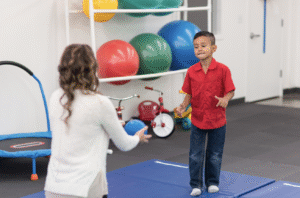
To an outsider, therapy may simply look like play—but every activity has a purpose. A toddler’s therapy session may include:
● Swinging
● Climbing
● Obstacle courses
● Sensory bins
● Ball activities
● Fine motor games
● Pretend play
● Feeding activities
● Movement-based learning
Each activity is carefully selected to support the child’s developmental goals while keeping them engaged and motivated.
Parent Involvement Is Key
One of the most important components of successful therapy is family involvement. At CWJR, we partner with families to help carry strategies into daily routines. Parents may learn:
● Sensory regulation strategies
● Home activities
● Transition supports
● Play ideas
● Environmental modifications
The more opportunities children have to practice skills throughout the day, the greater their potential for success.
How CWJR Can Help
At Crawl Walk Jump Run Therapy Clinic, our Occupational Therapists specialize in helping toddlers develop the foundational skills they need to thrive.
We provide individualized, play-based therapy to support:
● Sensory processing
● Emotional regulation
● Motor development
● Feeding skills
● Attention and focus
● Play skills
● Self-help skills
● School readiness
Our goal is to help children build confidence, gain independence, and reach their fullest potential through early intervention and sensory-based therapy.
The Earlier We Start, the Greater the Opportunity
The toddler years offer an incredible opportunity to support growth and development. When sensory challenges are identified and addressed early, children can build the skills they need for success in everyday life.
If you have concerns about your child’s sensory processing, play skills, behavior, feeding, or development, early intervention can make a meaningful difference.
At Crawl Walk Jump Run Therapy Clinic, we’re here to help your child crawl, walk, jump, run—and thrive.