Looking Beyond the Neck: How Occupational Therapy Supports the Whole Child
When parents hear the diagnosis torticollis, they often think only about a tight neck muscle and Physical Therapy. While Physical Therapy is an essential part of treatment, many children with torticollis can also benefit from Occupational Therapy (OT).
Torticollis can affect much more than head position. It may influence a child’s ability to play, explore their environment, use both sides of their body together, tolerate tummy time, develop fine motor skills, and reach important developmental milestones.
At Crawl Walk Jump Run Therapy Clinic (CWJR), our Occupational Therapists work alongside Physical Therapists to address the functional skills children need for everyday development and participation.
What Is Torticollis?
Torticollis is a condition in which the neck muscles become tight, causing a child to hold their head tilted to one side and rotated toward the opposite side.
Children with torticollis may demonstrate:
- A head tilt
- Preference for looking one direction
- Difficulty turning their head equally both ways
- Flattening of the head (plagiocephaly)
- Delayed motor milestones
- Difficulty tolerating tummy time
- Asymmetrical movement patterns
Early intervention is important because treatment is generally most effective when started as soon as concerns are identified.
Why Occupational Therapy May Be Recommended
Torticollis affects more than neck range of motion. Because babies learn about their world through movement, positioning, play, and sensory experiences, asymmetries caused by torticollis can influence multiple areas of development.
Occupational Therapy helps address how torticollis impacts:
- Play skills
- Fine motor development
- Sensory processing
- Visual skills
- Feeding
- Bilateral coordination
- Daily routines
- Developmental milestones
OT focuses on helping children participate more successfully in the activities that fill their day.
How Torticollis Can Affect Development
When a child consistently favors one side, they may miss opportunities to develop symmetrical movement patterns.
This can lead to challenges with:
Reaching and Grasping
A child may prefer using one hand or reaching toward one side.
Visual Development
Difficulty turning the head can affect how a child tracks toys and visually explores their environment.
Midline Skills
Children need to bring their hands together and use both sides of the body equally to develop foundational motor skills.
Sensory Experiences
Limited movement can reduce opportunities for sensory exploration and body awareness.
Play Skills
Children learn through play. Restrictions in movement can impact how they interact with toys and their environment.
How Occupational Therapy Helps
Promoting Symmetrical Development
One of the primary goals of Occupational Therapy is helping children use both sides of their body equally.
OT interventions may focus on:
- Encouraging reaching in both directions
- Facilitating midline play
- Improving weight shifting
- Promoting balanced movement patterns
- Encouraging equal use of both hands
These activities help build the foundation for future motor skills.
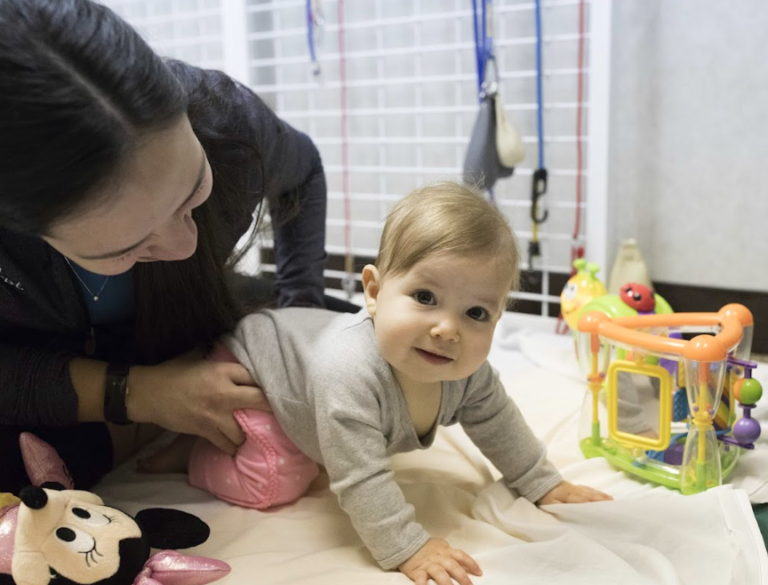
Improving Tummy Time Tolerance
Many babies with torticollis struggle with tummy time because of neck tightness or discomfort.
Occupational Therapists help make tummy time:
- More enjoyable
- More successful
- Developmentally appropriate
Activities may include:
- Positioning modifications
- Play-based engagement
- Visual tracking activities
- Parent coaching
Tummy time is important for developing:
- Neck strength
- Shoulder stability
- Core strength
- Motor milestones
Supporting Fine Motor Development
Fine motor skills begin developing much earlier than many parents realize.
Torticollis can impact:
- Reaching
- Grasping
- Hand-to-mouth activities
- Bilateral hand use
- Object manipulation
OT helps children develop the skills needed for future activities such as:
- Self-feeding
- Coloring
- Handwriting
- Dressing
- School participation
Encouraging Visual Tracking and Eye Movement Skills
Children with torticollis sometimes demonstrate visual preferences because they spend more time looking in one direction.
Occupational Therapists can work on:
- Visual tracking
- Eye coordination
- Visual attention
- Environmental exploration
These foundational skills support learning and engagement as children grow.
Addressing Sensory Processing and Body Awareness
Movement and sensory experiences are closely connected.
Children with torticollis may have difficulty developing awareness of both sides of their body.
OT helps improve:
- Body awareness
- Sensory processing
- Motor planning
- Movement confidence
Through play-based activities, children learn how their bodies move and interact with the world around them.
Supporting Feeding Skills
Some infants with torticollis demonstrate feeding challenges.
They may:
- Prefer nursing on one side
- Have difficulty positioning for feeds
- Show decreased tolerance for certain feeding positions
Occupational Therapists can assess feeding-related concerns and collaborate with the family to improve positioning and comfort during meals.
Improving Motor Planning
Motor planning refers to the brain’s ability to organize and execute movement.
Children with asymmetrical movement patterns may need additional support developing:
- Rolling
- Sitting
- Crawling
- Transitioning between positions
- Coordinated play skills
OT uses developmental activities to strengthen these foundational abilities.
Occupational Therapy and Plagiocephaly
Many children with torticollis also experience plagiocephaly, or flattening of one side of the head.
Occupational Therapy can help by:
- Encouraging active movement toward the non-preferred side
- Increasing tolerance for various positions
- Promoting symmetrical development
- Supporting environmental modifications at home
OT often collaborates closely with PTs, pediatricians, and orthotists when helmet therapy is recommended.
Parent Education Is Key
One of the most important components of Occupational Therapy is caregiver education.
Parents receive strategies for:
Positioning
Learning how to carry, hold, and position their child throughout the day.
Play Activities
Incorporating therapeutic play into everyday routines.
Environmental Set-Up
Arranging toys and activities to encourage movement in both directions.
Developmental Support
Helping children practice skills naturally during daily routines.
Research and clinical guidelines consistently emphasize caregiver education and environmental adaptations as important components of successful torticollis management.
The Benefits of a PT and OT Team Approach
Physical Therapy remains the primary treatment for congenital muscular torticollis and focuses on improving neck mobility, strength, posture, and symmetrical movement patterns.
Clinical practice guidelines recommend interventions such as neck range of motion, active movement, symmetrical development, environmental adaptations, and caregiver education.
Occupational Therapy complements these efforts by addressing how those physical limitations affect:
- Play
- Fine motor development
- Feeding
- Sensory processing
- Visual skills
- Daily participation
Together, PT and OT provide comprehensive support that addresses both the underlying physical limitations and the functional skills children need to thrive.
Signs Your Child May Benefit from Occupational Therapy
Your child may benefit from an OT evaluation if they:
- Have torticollis and struggle with tummy time
- Consistently use one side of their body more than the other
- Show delays in reaching or grasping
- Have feeding concerns
- Demonstrate sensory sensitivities
- Struggle with body awareness
- Have difficulty achieving developmental milestones
- Show asymmetrical play skills
Frequently Asked Questions
Isn’t Physical Therapy Enough for Torticollis?
Physical Therapy is the cornerstone of torticollis treatment, but some children benefit from Occupational Therapy to address developmental, sensory, feeding, visual, and fine motor concerns that may accompany torticollis.
Can OT Help With Feeding Difficulties Related to Torticollis?
Yes. Occupational Therapists can assess feeding positions, oral motor skills, and sensory factors that may impact feeding success.
How Early Can My Child Start Occupational Therapy?
Occupational Therapy can begin in infancy when developmental concerns are identified. Early intervention often leads to better outcomes and may reduce the duration of treatment needed.
Will I Receive Activities to Do at Home?
Absolutely. Parent involvement is one of the most important predictors of success. Your therapist will provide individualized activities and strategies that fit naturally into your daily routines.
How CWJR Can Help
At Crawl Walk Jump Run Therapy Clinic, our Occupational Therapists and Physical Therapists work together to help infants and young children overcome the challenges associated with torticollis.
We help children:
- Improve symmetrical movement
- Increase tummy time tolerance
- Develop fine motor skills
- Improve sensory processing and body awareness
- Support feeding success
- Encourage age-appropriate play
- Reach developmental milestones
- Build strong foundations for future learning and independence
Early Support Can Make a Big Difference
Torticollis is more than a neck condition. It can influence many areas of a child’s development.
Occupational Therapy helps address the functional skills children need to explore, learn, play, and grow with confidence.
At Crawl Walk Jump Run Therapy Clinic, our team is committed to helping children achieve their fullest potential through individualized, family-centered care that supports the whole child, not just the diagnosis.