
When your doctor notices a delay in your child’s gross motor development, taking the next step toward therapy can make a meaningful difference. Early intervention gives children the opportunity to build strength, improve coordination, develop movement skills, and work toward important milestones during the early years of growth.
At Crawl Walk Jump Run Therapy Clinic (CWJR), we understand that hearing your child may be experiencing a gross motor delay can feel overwhelming. Parents may wonder whether their child simply needs more time, whether the delay will resolve on its own, or whether therapy is really necessary.
While every child develops at their own pace, when a healthcare provider identifies a potential gross motor delay, it is important to follow up promptly rather than adopting a wait-and-see approach without guidance. Early evaluation can help determine what support your child needs and whether Physical Therapy may be beneficial.
What Is a Gross Motor Delay?
Gross motor skills involve the large muscles of the body that help children move, maintain balance, and explore their surroundings. These skills are essential for everyday activities, play, and increasing independence.
Examples of gross motor milestones include:
- Lifting and controlling the head
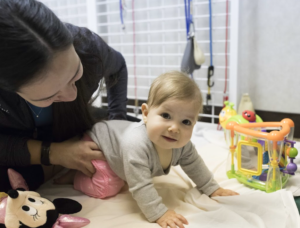
- Pushing up during tummy time
- Rolling from back to stomach and stomach to back
- Sitting independently
- Crawling or moving around the environment
- Pulling to stand
- Standing independently
- Walking, running, jumping, and climbing
A gross motor delay occurs when a child is not developing certain movement skills within the expected developmental timeframe. Delays can range from mild differences in milestone progression to more significant challenges with strength, balance, coordination, or movement.
A delay does not automatically mean that a child has a long-term condition. However, it may indicate that additional assessment and support are needed to help the child progress.
Why Would a Doctor Recommend Physical Therapy?
Pediatricians routinely monitor developmental milestones during well-child visits. They may ask questions about your child’s movement, observe how your child uses their body, and screen for possible developmental concerns.
A doctor may recommend a Physical Therapy evaluation if your child demonstrates:
- Difficulty holding their head steady
- Limited tolerance for tummy time or difficulty lifting their head
- Delays in rolling, sitting, crawling, standing, or walking
- Poor balance or coordination
- Decreased muscle strength or unusual muscle tone
- A preference for using one side of the body
- Difficulty transitioning between positions
- Persistent toe walking or unusual movement patterns
- Difficulty keeping up with age-appropriate physical activities
Sometimes, a doctor may provide a referral for Physical Therapy. In other cases, they may recommend further developmental assessment or additional medical evaluation.
If your doctor expresses concern about your child’s gross motor development, take that recommendation seriously. Asking questions and arranging an evaluation can help you understand your child’s needs and identify appropriate next steps.
Why Is It Important Not to Delay Therapy?
1. Early Childhood Is a Critical Time for Learning Movement Skills
During infancy and early childhood, children rapidly develop new movement abilities through practice, exploration, and interaction with their environment.
As children learn to roll, sit, crawl, stand, and walk, they build foundational skills that support increasingly complex movements.
Physical Therapy can help children practice these skills in a structured, developmentally appropriate way. When concerns are identified early, therapists can work with families to address barriers before they interfere further with participation in everyday activities.
Early intervention does not guarantee that every child will catch up at the same rate, but it creates an opportunity to identify needs and provide support as soon as possible.
2. Delays in One Skill Can Affect Opportunities to Practice Other Skills
Gross motor milestones build on one another. For example, developing head and trunk control supports sitting, while sitting balance helps children use their hands to play and explore.
When a child has difficulty with an earlier movement skill, they may have fewer opportunities to practice later skills.
A child who struggles to sit independently may have difficulty reaching for toys while maintaining balance. A child who has trouble standing may have fewer opportunities to explore their environment from an upright position.
A pediatric Physical Therapist evaluates these foundational movement skills and develops an individualized plan to help the child practice the abilities most appropriate for their needs.
3. Early Support Can Help Address Movement Patterns and Compensations
Children naturally find ways to accomplish tasks, even when certain movements are difficult. Sometimes, they develop compensatory movement patterns to make up for limitations in strength, flexibility, balance, or coordination.
For example, a child may consistently lean to one side when sitting or rely heavily on furniture to stand.
These patterns are not necessarily harmful, but they may indicate that a child needs additional support.
Physical Therapy can help identify movement challenges and teach strategies that encourage more efficient, symmetrical movement when appropriate.
4. Therapy Can Support Confidence and Participation
Movement skills allow children to participate in play, interact with other children, and explore their surroundings.
When movement is difficult, a child may become frustrated or avoid activities that feel challenging.
Pediatric Physical Therapy uses play-based activities to help children practice new skills in a supportive environment. As children gain experience and improve their abilities, they may become more comfortable participating in everyday activities.
The goal is not simply to achieve a milestone. It is to help children move, explore, play, and participate as fully as possible.
5. Parents Gain Practical Strategies to Use at Home
Therapy is not limited to the time a child spends in the clinic. Parents and caregivers play an important role in helping children practice new skills throughout their daily routines.
A Physical Therapist can demonstrate positioning techniques, play activities, and movement opportunities that are appropriate for the child’s age and abilities.
These strategies can be incorporated into everyday activities such as:
- Floor play
- Tummy time
- Reaching for toys
- Practicing sitting balance
- Moving between positions
- Playing at a stable surface
- Exploring the environment with appropriate supervision
Having a clear plan can help parents feel more confident about how to support their child’s development between therapy sessions.
What Happens If We Wait to See Whether Our Child Catches Up?
It is understandable to hope that a child will develop a skill independently with more time. Some children do progress without intervention, and not every variation in milestone timing indicates a significant concern.
However, when a physician has identified a possible delay, waiting without further evaluation may postpone the opportunity to understand why the delay is occurring and what support could help.
An evaluation does not automatically mean your child will need long-term therapy. Instead, it provides valuable information about your child’s current abilities, strengths, and areas of concern.
Depending on the findings, the therapist may recommend ongoing treatment, a home program, monitoring, or communication with your child’s healthcare provider about additional assessment.
The purpose of early evaluation is not to create unnecessary worry. It is to make informed decisions while there is an opportunity to support your child’s development.
What Does a Pediatric Physical Therapy Evaluation Include?
At Crawl Walk Jump Run Therapy Clinic, a pediatric Physical Therapy evaluation focuses on understanding your child’s movement abilities and identifying areas where additional support may be beneficial.
Depending on your child’s age and needs, the therapist may assess:
Muscle strength and control: How your child activates and controls the muscles needed for movement.
Range of motion and flexibility: Whether limitations in movement affect your child’s ability to change positions or perform activities.
Muscle tone: Whether muscle tone appears unusually low or high and how it influences movement.
Balance and coordination: How your child maintains stability and coordinates movements during play and daily activities.
Gross motor milestones: Which movement skills your child has developed and which skills may need additional support.
Movement symmetry: Whether your child uses both sides of the body in a balanced way when appropriate.
Functional participation: How your child’s movement abilities affect play, mobility, and participation in daily routines.
The therapist will discuss the findings with you and explain whether Physical Therapy is recommended.
How Can Physical Therapy Help With Gross Motor Delays?
Pediatric Physical Therapy is designed to help children improve their movement abilities through individualized treatment and guided practice.
At CWJR, treatment may include:
Strengthening and Postural Control
Therapists use age-appropriate activities to help children develop the strength and stability needed for sitting, standing, walking, and other movements.
Balance and Coordination
Play-based activities help children practice maintaining balance, shifting their weight, and coordinating their bodies during movement.
Practicing Developmental Milestones
Therapists work on skills that are appropriate for each child’s developmental level, such as rolling, sitting, crawling, pulling to stand, or walking.
Improving Mobility and Movement Transitions
Children may practice moving safely and efficiently between positions, such as transitioning from sitting to standing or getting down to the floor.
Supporting Walking and Other Mobility Skills
For children who need additional assistance with walking, therapists may work on strength, balance, coordination, gait patterns, and appropriate mobility equipment when indicated.
Caregiver Education
Parents learn how to support their child’s movement goals through appropriate play, positioning, and daily routines.
Every child is different. Treatment goals and the expected duration of therapy depend on the child’s needs, medical history, progress, and overall development.
What If My Child Is Already Walking but Still Seems Behind?
Gross motor delays are not limited to infants who have not yet reached early milestones.
Toddlers and older children may walk independently but still struggle with more advanced movement skills, including:
- Running
- Jumping with both feet
- Climbing stairs
- Balancing on one foot
- Navigating playground equipment
- Keeping up with peers during active play
- Coordinating movements during sports and recreational activities
A child may also appear clumsy, tire easily during physical activities, or avoid movements that other children their age enjoy.
If your child’s doctor has expressed concern, or if you notice persistent difficulty with age-appropriate physical activities, a Physical Therapy evaluation may help determine whether treatment is appropriate.
Frequently Asked Questions
Does a Gross Motor Delay Mean My Child Has a Disability?
Not necessarily. Gross motor delays can have many causes, and some children make substantial progress with time and appropriate support. An evaluation can help identify your child’s needs and determine whether further medical assessment or therapy is recommended.
Should I Wait Until My Next Pediatrician Appointment?
If your doctor has already recommended an evaluation or referral, contact the appropriate provider rather than waiting for the next routine visit. If you are unsure what your doctor intended, ask their office to clarify the recommended next steps.
Does My Child Need a Doctor’s Referral for Physical Therapy?
Referral requirements vary depending on your insurance plan, payer rules, and applicable state requirements. Contact CWJR and your insurance company to confirm what is needed before beginning treatment.
How Long Will My Child Need Physical Therapy?
There is no single timeline for treating gross motor delays. Some children need a short period of support, while others benefit from longer-term treatment. The therapist will work with your family to establish goals and monitor progress.
Can We Work on Gross Motor Skills at Home Instead of Attending Therapy?
Home activities can be valuable, but they may not replace a professional evaluation when a delay has been identified. A Physical Therapist can determine which activities are appropriate and whether your child needs skilled intervention.
What If My Child Is Not Meeting Milestones but Our Doctor Has Not Mentioned a Delay?
You can share your concerns with your child’s pediatrician and ask whether a developmental screening or Physical Therapy evaluation is appropriate. You do not need to wait for a concern to become more significant before asking for guidance.
How to Get Started With Physical Therapy at CWJR
If your child’s physician has recommended Physical Therapy or you are concerned about your child’s gross motor development, Crawl Walk Jump Run Therapy Clinic is here to help.
Here are your next steps:
- Contact our team. Call CWJR at 586-323-2957 to discuss your concerns and ask about the evaluation process.
- Check referral and insurance requirements. Our team can help you understand what information may be needed to begin services.
- Schedule an evaluation. A pediatric Physical Therapist will assess your child’s movement skills and discuss individualized recommendations.
- Develop a treatment plan. If therapy is indicated, your therapist will establish goals based on your child’s needs and abilities.
- Practice and monitor progress. Your therapist will work with your family to support progress in the clinic and through appropriate activities at home.
At CWJR, we strive to schedule appointments in advance whenever possible, helping families maintain consistency throughout their child’s treatment plan.
Give Your Child the Opportunity to Keep Growing
When a doctor identifies a possible gross motor delay, it can be difficult to know what to do next. You may wonder whether your child needs more time or whether intervention is necessary.
The most important step is to seek guidance rather than ignore the concern. Early evaluation helps families understand their child’s needs and determine what support may be beneficial.
At Crawl Walk Jump Run Therapy Clinic, our pediatric Physical Therapy team is committed to helping children build strength, improve coordination, develop functional movement skills, and work toward their individual goals.
Every child develops at their own pace, but you do not have to navigate concerns about gross motor development alone.
If you have questions about your child’s movement or have been advised to seek Physical Therapy, contact CWJR at 586-323-2957 to learn more about getting started.
Disclaimer: This article is for educational purposes only and is not a substitute for medical advice, diagnosis, or individualized treatment. If you have concerns about your child’s development, consult your child’s healthcare provider.