Have you noticed your parent slowing down? Maybe they are not walking as much as they used to, seem less steady on their feet, or have started avoiding activities they once enjoyed.
Perhaps they are spending more time sitting at home, declining invitations to go out, or becoming frustrated because everyday activities are getting harder.
As our parents age, changes in strength, balance, endurance, and mobility can affect much more than their physical abilities. These changes can also affect their confidence, independence, social interactions, and emotional well-being.
One thing families may not realize is that physical therapy can help support both the physical and emotional well-being of an aging adult.
Therapy is not just about recovering from an injury or learning to walk again after surgery. It can help older adults maintain their abilities, stay active, improve confidence, and continue participating in the activities that make life meaningful.
Why Balance and Strength Become More Important as We Age
As we get older, changes in muscle mass, joint mobility, reaction time, sensation, and balance can make everyday movement more challenging.
Activities that once seemed simple may begin requiring more effort, including:
- Getting up from a chair or couch.
- Walking through the grocery store.
- Climbing stairs.
- Getting in and out of a vehicle.
- Walking on uneven sidewalks or grass.
- Carrying groceries or household items.
- Getting dressed or showering safely.
When these activities become difficult, older adults may begin doing less. Unfortunately, decreased activity can contribute to further weakness, reduced endurance, and loss of mobility.
This can create a cycle: less movement leads to less strength, which makes movement more difficult and can increase the fear of falling.
Physical therapy can help interrupt this cycle by addressing strength, balance, mobility, and confidence.
1. Physical Therapy Helps Improve Strength and Mobility
Maintaining muscle strength is important for preserving independence as we age.
Leg and core strength help us stand up, walk, climb stairs, maintain balance, and complete everyday activities.
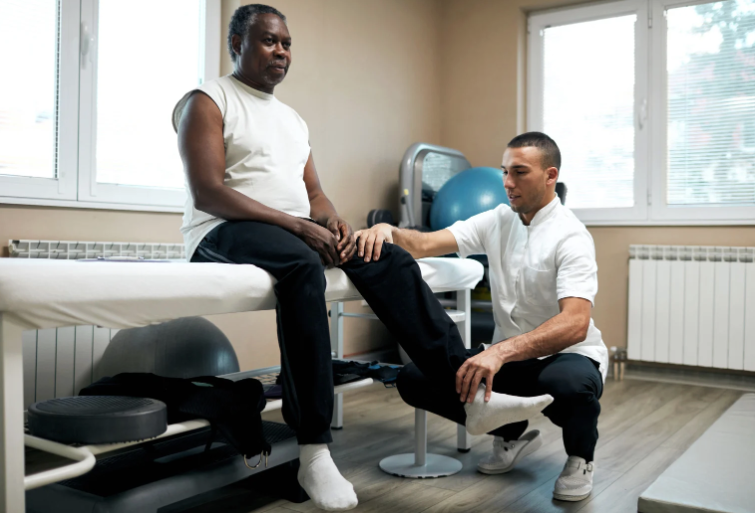
A physical therapist can evaluate your parent’s strength and identify areas that may benefit from targeted exercise.
Treatment may include:
- Lower body strengthening.
- Core strengthening.
- Sit-to-stand exercises.
- Walking and endurance training.
- Functional movement exercises.
- Flexibility and range-of-motion activities.
The goal is to help your parent maintain the strength needed to move around their home and community as safely and independently as possible.
Even if your parent is not experiencing pain or recovering from an injury, physical therapy may help address weakness and mobility changes associated with aging.
2. Physical Therapy Helps Improve Balance and Reduce Fall Risk
One of the biggest concerns families have as their parents get older is the risk of falling.
A fall can result in serious injury, hospitalization, and a loss of independence. But the effects of fall risk can begin long before an actual fall occurs.
Your parent may:
- Hold onto furniture when walking.
- Avoid stairs or uneven surfaces.
- Feel unsteady when turning or changing directions.
- Take smaller or slower steps.
- Become nervous walking outside.
- Avoid going places because they are afraid of falling.
Physical therapy can help assess balance and identify factors contributing to fall risk.
Treatment may include:
- Standing balance activities.
- Weight-shifting exercises.
- Stepping and coordination activities.
- Walking on different surfaces.
- Practicing turns and changes in direction.
- Functional strengthening.
- Training with a cane or walker when appropriate.
Improving balance can help older adults feel more secure when moving around their home and participating in community activities.
You do not have to wait for your parent to fall before addressing balance concerns. Early evaluation can help identify areas where therapy may be beneficial.
3. Physical Activity Can Support Mental and Emotional Well-Being
This is an important part of aging that families sometimes overlook.
When an older adult begins losing strength or mobility, they may also begin losing confidence in their ability to participate in everyday life.
They may stop attending social events, avoid family outings, or become frustrated because activities that were once easy now feel overwhelming.
Over time, reduced activity and social isolation can contribute to feelings of sadness, loneliness, and decreased motivation.
Physical therapy can support emotional well-being in several ways.
Building Confidence
As your parent works toward physical goals and sees improvements in their abilities, they may begin feeling more confident about moving around.
Being able to walk farther, stand up more easily, or navigate stairs with greater confidence can make everyday life feel less overwhelming.
Encouraging Independence
Losing independence can be one of the most difficult parts of aging.
Physical therapy helps older adults work toward maintaining the skills needed to complete daily activities. Even small improvements can make a meaningful difference in how much assistance they need from family members.
Increasing Activity and Participation
Movement and exercise can support overall health and emotional well-being.
Therapy provides structured opportunities to move, practice functional activities, and work toward personal goals.
For some older adults, having a consistent therapy routine also provides something positive to look forward to during the week.
Improving Social Engagement
When mobility becomes difficult, older adults may stop participating in activities outside the home.
Improving strength, balance, and endurance may help make it easier to attend family gatherings, visit friends, go shopping, or participate in community activities.
Physical therapy does not replace treatment for depression, anxiety, or other mental health concerns. However, helping an older adult remain active and connected can be an important part of supporting their overall well-being.
4. Therapy Can Help Your Parent Stay Independent Longer
One of the greatest concerns families have is watching a parent gradually become more dependent on others.
You may notice that your parent is having difficulty with activities they used to manage independently. They may need more help getting dressed, getting in and out of the shower, preparing meals, or moving around the house.
Physical therapy can help address the strength, balance, and mobility needed for these activities.
Occupational therapy may also be beneficial when your parent has difficulty completing daily tasks. Occupational therapists focus on helping people participate in everyday activities through functional training, adaptive techniques, and recommendations for equipment or home modifications.
Depending on your parent’s needs, PT and OT can work together to support greater safety and independence.
5. Therapy Helps Address Changes Before They Become Bigger Problems
Families sometimes wait until a parent experiences a fall, injury, or hospitalization before considering therapy.
However, changes in mobility can happen gradually.
Maybe your parent is walking more slowly, avoiding stairs, struggling to get up from a chair, or relying more heavily on furniture for support.
These changes may be signs that their strength, balance, or mobility deserves a closer look.
A physical therapy evaluation can help identify areas of concern and determine whether an individualized exercise and rehabilitation program may help.
Therapy can also be beneficial for older adults living with neurological conditions such as Parkinson’s disease, stroke, multiple sclerosis, or peripheral neuropathy, which may affect strength, balance, coordination, and walking.
Signs Your Aging Parent May Benefit From Therapy
Consider talking with your parent’s healthcare provider about a therapy evaluation if you notice:
- Frequent falls or near falls.
- Difficulty getting up from a chair.
- Increased reliance on a cane, walker, or furniture.
- Difficulty walking longer distances.
- Decreased strength or endurance.
- Trouble navigating stairs.
- Avoidance of activities because of fear of falling.
- Reduced participation in social activities.
- Difficulty completing everyday tasks.
- A noticeable decline in mobility or confidence.
You do not need to wait until your parent has a major injury or loses significant independence to explore therapy.
If your parent has a sudden change in walking, new weakness, dizziness, confusion, or other concerning symptoms, seek medical evaluation promptly. Sudden facial drooping, arm weakness, or speech difficulty requires emergency care.
How CWJR Can Help Your Aging Parent
At Crawl Walk Jump Run Therapy Clinic, we understand that maintaining independence becomes increasingly important as we age.
Our physical therapy team works with adults experiencing changes in strength, balance, coordination, walking, and mobility. We also work with individuals who have neurological conditions that affect their ability to move safely and confidently.
We look beyond the physical limitations to understand how those challenges affect everyday life.
Whether your parent wants to walk more confidently, improve their balance, build strength, reduce fall risk, or remain independent at home, an individualized therapy program can help them work toward meaningful goals.
Helping your parent stay strong, active, and independent is about more than adding years to life. It is about helping them make the most of the years ahead.
If you have noticed changes in your parent’s balance, strength, mobility, or confidence, contact CWJR to learn whether a physical or occupational therapy evaluation may be appropriate.
Crawl Walk Jump Run Therapy Clinic
Phone: 586-323-2957
Website: crawlwalkjumprun.com